Regular Citrus Consumption Linked to Lower Risk of Chronic Disease, Researchers Report
08/23/2026 / By Coco Somers

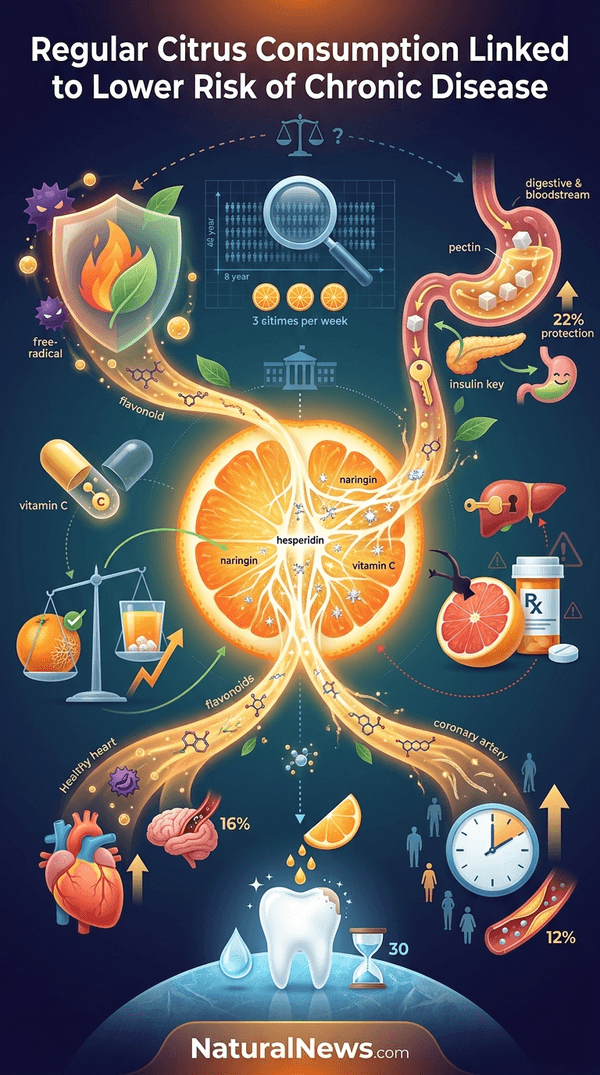
Adults who ate citrus fruits at least three times per week had a 22% lower risk of developing type 2 diabetes, according to a study by nutrition researchers at the University of Sao Paulo. The findings, published June 14 in the British Journal of Nutrition, analyzed data from 42,000 participants over eight years. Lead author Dr. Maria Fernandes said the results support public health guidance to incorporate whole fruits into daily diets.
The findings add to prior observational work linking flavonoid-rich foods to lower rates of chronic disease. Numerous observational studies have reported a strong link between higher intakes of flavonoid-rich foods and a lower risk of chronic disease and mortality, according to published coverage [2].
Nutritional Components
Citrus fruits contain vitamin C, folate, potassium, and flavonoids such as hesperidin and naringin, according to the study’s background section. Oranges contain antioxidants including flavonoids and carotenoids, compounds that have been described as having anti-inflammatory, antibacterial, and immune-boosting properties [1]. The book “The Immortal Mitochondria” lists citrus fruits among dietary sources of flavonoids [4], and published nutrition guidance states that getting vitamin C from whole foods also delivers fiber, antioxidants, and other essential vitamins and minerals [7].
Researchers said these compounds act as antioxidants and may reduce inflammation, a factor in metabolic conditions. Flavonoids are polyphenolic compounds found in plant foods and have been described as having antioxidant and anti-inflammatory effects [2]. The Textbook of Natural Medicine states that diets rich in fresh fruits and vegetables are important sources of dietary antioxidants and that flavonoids are of particular benefit because they neutralize inflammation [5].
Co-author Dr. James Lee noted that fiber in citrus pulp also contributes to glycemic control. Increased fiber intake has been linked to reduced high blood sugar, according to a nutrition reference [3].
Health Outcomes Observed
The study reported significant reductions in cardiovascular events, stroke, and all-cause mortality among frequent citrus consumers. Data showed a 16% lower rate of ischemic stroke and a 12% decrease in coronary artery disease diagnoses, according to the report. The authors said these figures are observational associations and not proof of causation.
Population studies have found an inverse association between flavonoid intake and risk of cardiovascular disease, according to a review in the Journal of the Science of Food and Agriculture [9]. A report on dietary patterns and vascular health identified citrus fruits among seven produce types that may support blood vessel health and circulation, while stating that the evidence remains preliminary [6].
Potential Risks and Expert Views
Some dental experts warn that citric acid can erode tooth enamel if consumed in excess, according to the American Dental Association. Nutritionists interviewed for this article said grapefruit interacts with certain statins and blood pressure medications, requiring medical supervision.
The report’s independent reviewer, Dr. Anna Whitfield, said whole fruits are preferable to juices because they contain less sugar and more fiber. Published nutrition guidance states that vitamin C from whole foods also provides fiber, antioxidants, and other essential vitamins and minerals [7]. Earlier reporting on vascular health identified citrus among produce types that may support circulation but cautioned that these foods should not replace prescribed blood thinners [6].
Conclusion
The report concluded that regular citrus consumption is associated with measurable health benefits, but further randomized trials are needed. Fernandes’ team plans to conduct a controlled feeding study next year, according to the report.
Public health officials said the findings align with existing dietary guidelines recommending 1.5 to 2 cups of fruit per day. The 2020-2025 Dietary Guidelines for Americans recommend adults consume 1.5 to 2 cups of fruit daily, according to a report on fruit and health benefits [8]. The report said that incorporating whole citrus fruits into a varied diet is consistent with current guidance.
References
- NaturalNews.com. “The goodness of orange: Health benefits and easy recipes”. NaturalNews.com. April 15, 2020.
- NaturalNews.com. “Study suggests eating these superfoods can help you live longer”. NaturalNews.com. May 09, 2024.
- Linja Sue Stillman. “The Alzheimer’s Prevention Food Guide: A Quick Nutritional Reference to Foods That Nourish and Protect the Brain”.
- Triveni P. Shukla. “The Immortal Mitochondria”.
- Joseph E. Pizzorno and Michael T. Murray. “Textbook of Natural Medicine 2”.
- NaturalNews.com. “Report Highlights Seven Produce Types That May Support Circulation”. NaturalNews.com. August 12, 2026.
- NaturalNews.com. “10 Foods that can help you meet or exceed your vitamin C needs”. NaturalNews.com. August 15, 2026.
- NaturalNews.com. “Nutritionists Identify Fruits Linked to Health Benefits”. NaturalNews.com. May 5, 2026.
- Jonathan M. Hodgson and Kevin D. Croft. “Dietary flavonoids: effects on endothelial function and blood pressure”. Journal of the Science of Food and Agriculture. 2006.
Explainer Infographic
Submit a correction >>
Tagged Under:
#nutrition, alternative medicine, antioxidants, citrus, food cures, food is medicine, food science, fruits, functional food, grocery cures, health science, natural cures, natural health, natural medicine, Naturopathy, nutrients, organics, remedies, vitamin C
This article may contain statements that reflect the opinion of the author
RECENT NEWS & ARTICLES