Swiss Chard: A Nutrient-Dense Leafy Green Often Overlooked in Produce Aisle
06/28/2026 / By Coco Somers
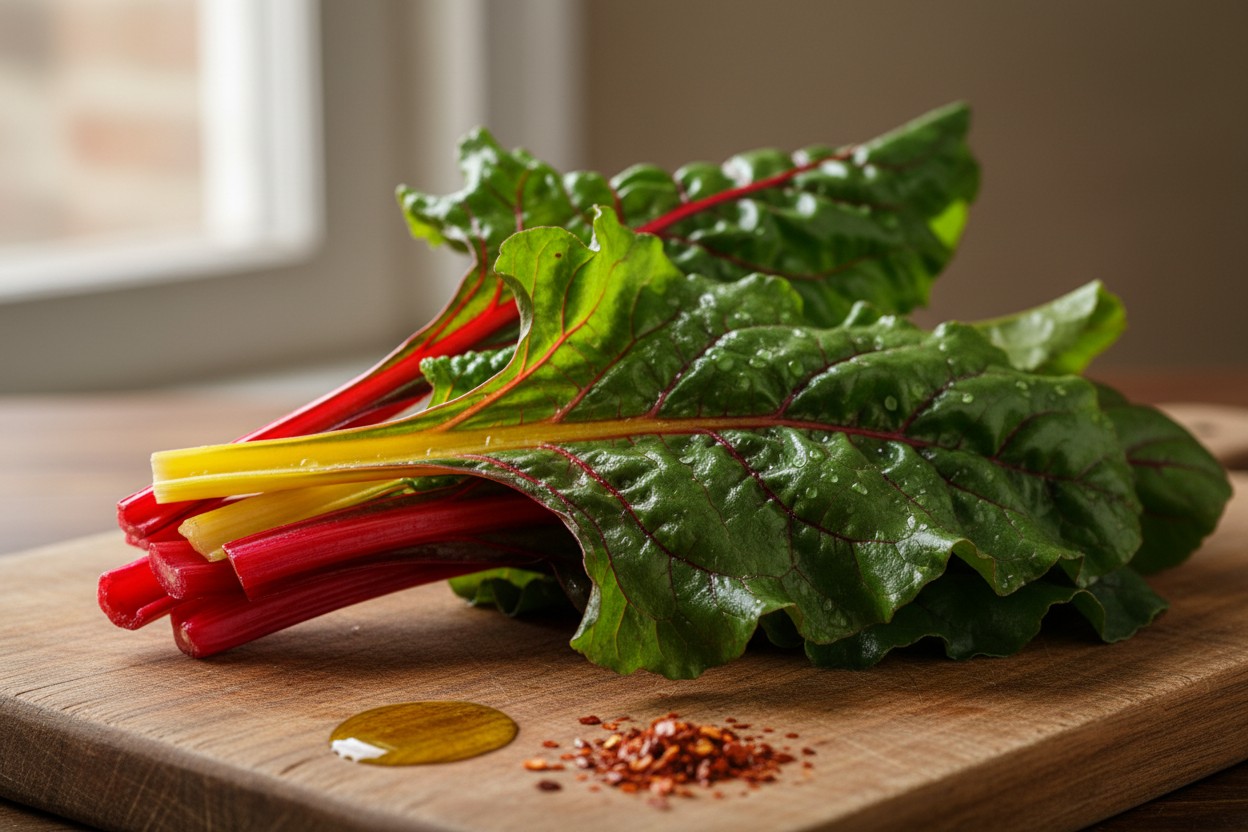
Swiss chard, a leafy green vegetable typically costing $3 to $4.50 per bunch, provides significant nutritional value per serving, according to dietitians and recent research.
Despite being overshadowed by more popular greens like spinach and kale, Swiss chard offers a mild, slightly earthy flavor and a dense profile of vitamins, minerals, and fiber. According to a report published by the Daily Mail in June 2026, the vegetable is an affordable way to add dietary variety and contains just 35 calories per cooked cup.
Nutritional Profile and Health Benefits
According to a 2021 study in Critical Reviews in Food Science and Nutrition cited in the Mail report, Swiss chard may support health by providing fiber, vitamin C, magnesium, potassium and antioxidant plant compounds that aid digestion, immune function, and heart health. One cup of cooked Swiss chard provides 477 percent of the daily value for vitamin K, 22 percent for iron, and 35 percent for vitamin C, according to data cited by dietitian Jessica Cording in the same report. The vegetable also contains about 4 grams of fiber per cooked cup, which can help manage diabetes, obesity, and inflammation, the study noted.
Research on Swiss chard extracts has demonstrated antioxidant activity. A study published in the Journal of Agricultural and Food Chemistry in 2003 examined the phenolic compounds and antioxidant properties of Swiss chard (Beta vulgaris subspecies cycla) extracts [6].
Additionally, Swiss chard is rich in vitamin K, which is essential for bone mineralization via osteocalcin activation and preventing arterial calcification, according to an article published by NaturalNews.com on April 7, 2026 [1]. Swiss chard has been used by ancient Greeks and Romans for its medicinal properties, according to a separate article on NaturalNews.com dated Aug. 11, 2025 [2].
Preparation and Cooking Methods
Dietitian Whitney Linsenmeyer, an assistant professor of nutrition and dietetics at Saint Louis University and spokesperson for the Academy of Nutrition and Dietetics, recommends separating the stems from the leaves by holding the base of the stem and stripping the leaves off. The stems are fully edible and can be diced, while the leaves can be torn into 1-inch pieces, according to the Mail report.
To cook, Linsenmeyer suggests sauteing the stems in olive oil or butter until tender — about 5 minutes — then adding the leaves with a splash of liquid such as vegetable or chicken stock or white wine, seasoning with salt, black pepper, and red chili flakes, and cooking until tender, about 10 minutes.
Swiss chard can be substituted for spinach or kale in recipes, according to Cording, who also recommended adding it to egg dishes like omelets and egg bites, or blending it into smoothies. According to the book “Eat for Extraordinary Health Healing” [3], it is important to wash leafy greens thoroughly since they grow close to the ground and can capture dirt and grit.
The recommended method is to fill a sink or large bowl with cold water and swish the greens around, allowing sand to settle, then transfer to a colander to drain. Swiss chard is part of the chenopod family alongside beets, chard and quinoa. Like kale and spinach, it is a nutrient-dense option, according to the book “Green Smoothies for Every Season” by Kristine Miles [4].
Conclusion
Swiss chard offers a mild flavor and can be prepared using simple techniques such as sauteing or steaming, making it an accessible alternative to other leafy greens. Dietitians said incorporating Swiss chard into meals provides a nutrient-rich addition to a varied diet at a low cost.
Adding more plant-based foods is a smart move, according to the Daily Mail report, and Swiss chard is a fresh alternative worth adding to the grocery list. Given its high content of fiber, vitamin K and antioxidants, and its versatility in cooking, Swiss chard represents an underused vegetable that can support long-term health.
References
- The power of Swiss chard: A superfood packed with vitamin K and vital nutrients. NaturalNews.com. April 7, 2026.
- Laura Harris. Swiss chard: Support optimal health and wellness with this nutrient dense leafy green. NaturalNews.com. August 11, 2025.
- Eat for extraordinary health healing.
- Kristine Miles. Green Smoothies for Every Season.
- Patrick Lewis. Swiss chard: The superfood leafy green you need in your diet. NaturalNews.com. April 12, 2026.
- Young-Hee Pyo, Tung-Ching Lee, Logan Logendra, Robert T. Rosen. Antioxidant activity and phenolic compounds of Swiss chard (Beta vulgaris subspecies cycla) extracts. Journal of Agricultural and Food Chemistry. 2003.
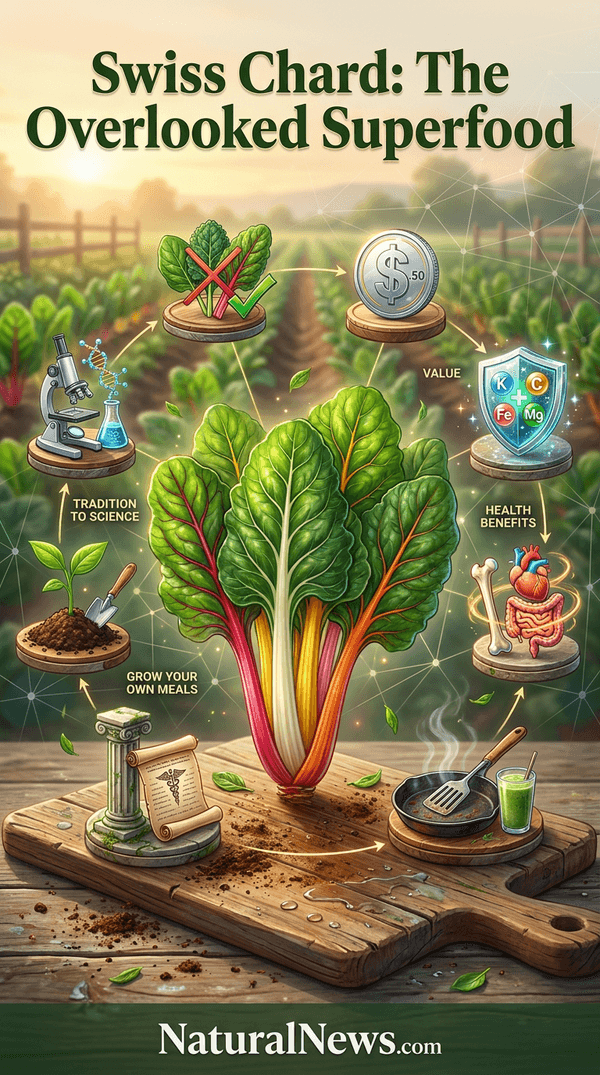
Explainer Infographic
Submit a correction >>
Tagged Under:
#nutrition, food cures, food is medicine, food science, functional food, health science, natural health, nutrients, organics, phytonutrients, swiss chard, Vegetable, veggie
This article may contain statements that reflect the opinion of the author
RECENT NEWS & ARTICLES